Why wet food is a good fit for a kitten
A kitten grows quickly during the first few months and needs food that delivers both protein and energy in small portions. Wet food meets that need well for three reasons. First, the meat content is high, and kittens are strict carnivores that get the vast majority of their building blocks from animal protein. Second, wet food typically contains around 70-80 % water, which helps with fluid balance. Cats have a weak sense of thirst by nature, and a kitten that gets most of its fluids through its food relieves the kidneys and urinary tract. Third, the texture is soft, so the food is easy to chew and swallow for a mouth that has just moved from mother's milk to solid food.
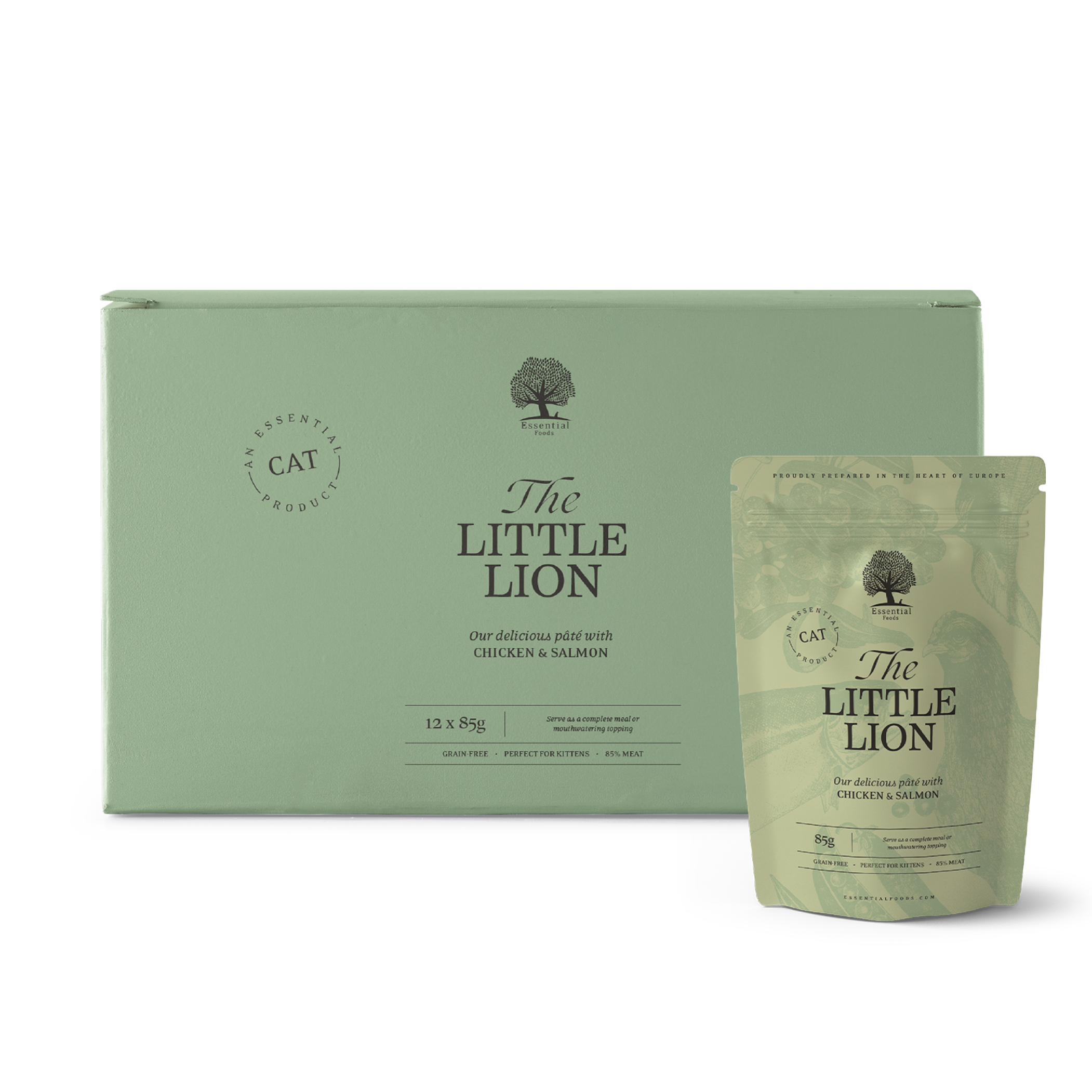
If you want to start your kitten on a wet food with a high meat content, you'll find the little lion here in the collection. It is a soft pâté in portion size, composed for the youngest cats.
From what age can kittens have wet food
A kitten can start tasting soft wet food around 3-4 weeks of age, while it is still nursing from its mother. During that period the food is a supplement, not a replacement for mother's milk, and many kittens need it mashed up or softened at first. The weaning itself happens gradually, and most kittens are fully weaned from mother's milk around 8 weeks of age.
If you bring a kitten home at 8-12 weeks, it is therefore usually already used to solid food. Ask the breeder or the shelter what it has eaten so far, and stick with the same for the first few days. If you need to switch to a new food, do it over the course of about a week by mixing in a little more of the new food each day, so the stomach has time to get used to it.
How much and how often should a kitten be fed
A kitten's stomach is small, and its energy requirement is large relative to its body weight. That's why it needs food several times a day rather than one or two large portions. As a rule of thumb, a very small kitten is fed four times a day, and as it grows you can cut down to three and later two meals. The exact amount depends on the kitten's age, weight and activity level, and the pâté has a guiding dosage table you can use as a starting point.
Keep an eye on the kitten maintaining steady growth without becoming round around the belly, and adjust the amount based on what you see. Serve the wet food at room temperature, as cold food straight from the fridge smells less and is not as tempting. Leftovers should not be left out for long, as opened wet food dries out and loses its scent.
Wet food or dry food for the kitten
Many people don't choose one or the other, but let wet food and dry food complement each other. Wet food contributes moisture, high palatability and a high meat content, while dry food is practical to keep on hand and easier to portion throughout the day. A common solution is to give wet food as the fixed meals and leave a little dry food out for free access, or vice versa.
Whatever you choose, the food should be intended for kittens, so it matches their high requirement for protein and energy during the growth phase. See the rest of the range for the youngest cats in the kitten collection, and find the other selection for cats under cat food.
How to make the transition from mother's milk easier
The first independent meals can take a little while to learn. Serve the pâté slightly warm, possibly stirred with a little water for a softer texture, so it more closely resembles what the kitten knows. Use a flat, shallow bowl so the muzzle and whiskers don't get squashed against the edges, and place the food in a quiet spot away from the litter box.
If the kitten is hesitant, you can dab a little food on your finger or by its mouth so it gets the taste and finds the bowl on its own. Always make sure there is fresh water available alongside, even if a kitten on wet food gets a large part of its fluids through its food.


 Denmark
 Sweden
 Germany
 Norway
 United Kingdom
 Europe