Meat first: it determines whether the cat food is good
Cats are obligate carnivores. Unlike dogs and humans, they cannot meet their need for protein and a range of essential nutrients from plants alone. They need animal protein, and they need the amino acid taurine, which is found almost exclusively in animal tissue. If a cat gets too little taurine over time, it can affect both its heart and its vision. That is why the first thing you should look for in a good cat food is how much real meat or fish it contains, and whether it appears at the top of the ingredient list.
The ingredients are listed in descending order by weight. If meat or fish is at the top with a specific percentage, that is a good sign. If, on the other hand, the top ingredients are grain, corn or vague terms such as "animal by-products" without further explanation, it tells you that the food is largely built around cheaper fillers rather than the meat the cat is actually designed to live on. The food in this collection is built around a high content of animal protein for precisely that reason.
How to read the ingredient list on cat food
A few concrete things make it easier to tell good from mediocre when you're standing there with the bag in your hand.
Look for named protein sources. "Chicken" and "salmon" tell you something; "meat and bone meal" or "animal by-products" say very little about what is actually in it. Look at the percentage of meat, not just whether the word is there. A food can easily mention chicken and still contain very little of it.
Pay attention to the amount of carbohydrates. Cats have a low natural need for carbohydrates, and a very high content of grain or potato is typically used to bind the dry food together and keep the price down, not because the cat needs it. If you want to keep grain out entirely, the entire Essential Foods cat range is available grain-free.
Finally, it tells you something if artificial colours, flavours and preservatives have been added. The cat gains nothing from it, and a good-quality food rarely needs to embellish either its taste or its appearance with additives.
Dry food or wet food: when to use which
There is no single right answer, and the two types of food each solve a different task. Dry food goes a long way, is easy to portion and can be left out without spoiling quickly. Wet food, or paté, has a high water content, which is an advantage because many cats drink too little relative to what is good for their kidneys and urinary tract.
A good solution for many cats is a combination: dry food as the base and paté as a moisture-rich part of the diet. If you want to give paté, it is available both as meals for kittens, paté for adult cats and as part of the range under cat paté, so you can match it to your cat's age. If your cat generally drinks little, or has previously had problems with its urinary tract, that is a reason to give a larger part of the food as wet food.
Food based on the cat's age and life stage
A kitten, an adult cat and an older cat do not have the same needs, and good cat food takes that into account. Kittens grow quickly and need more energy and protein per kilo of body weight than adult cats. Older cats are often less active and can benefit from food adapted to a calmer metabolism and possibly the kidneys.
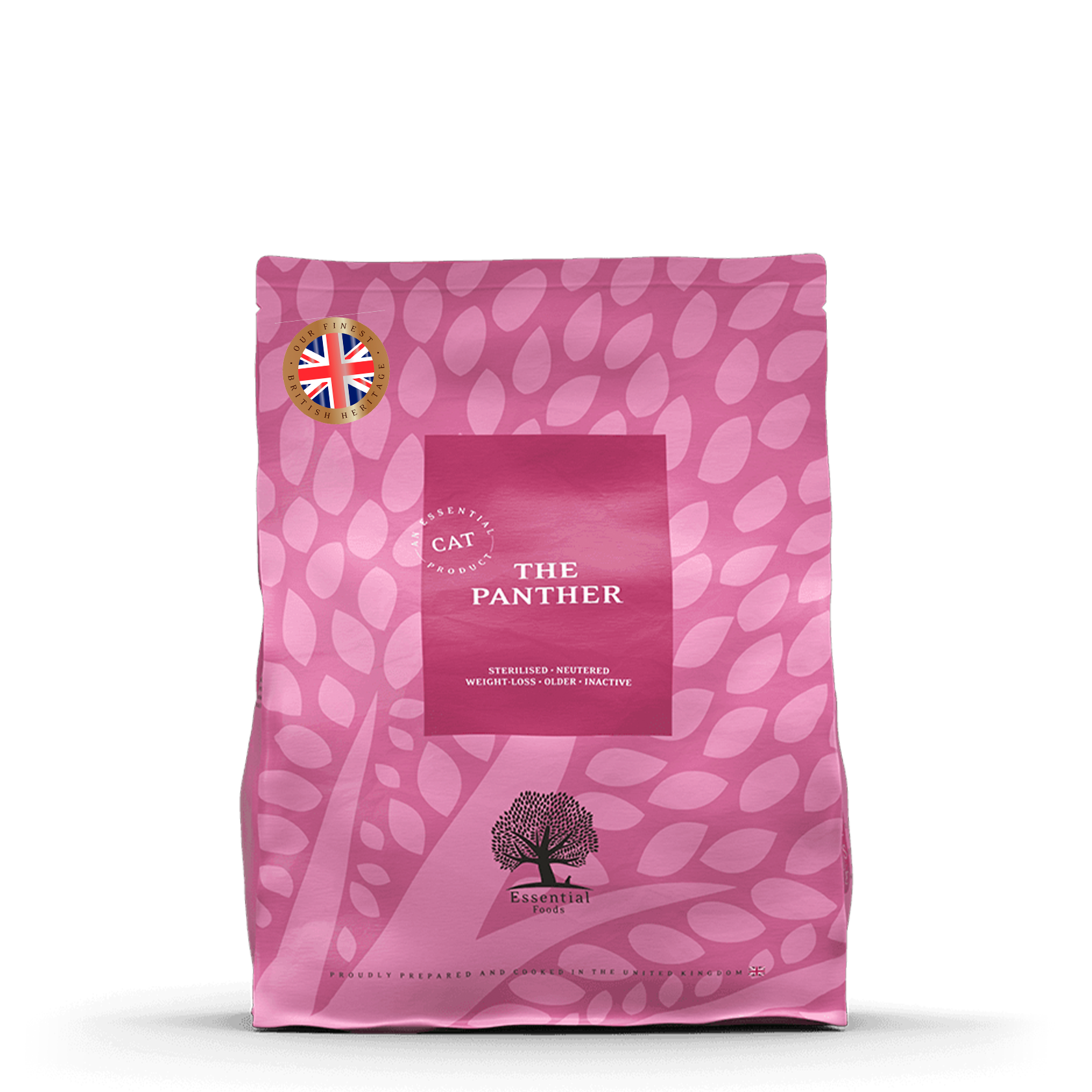
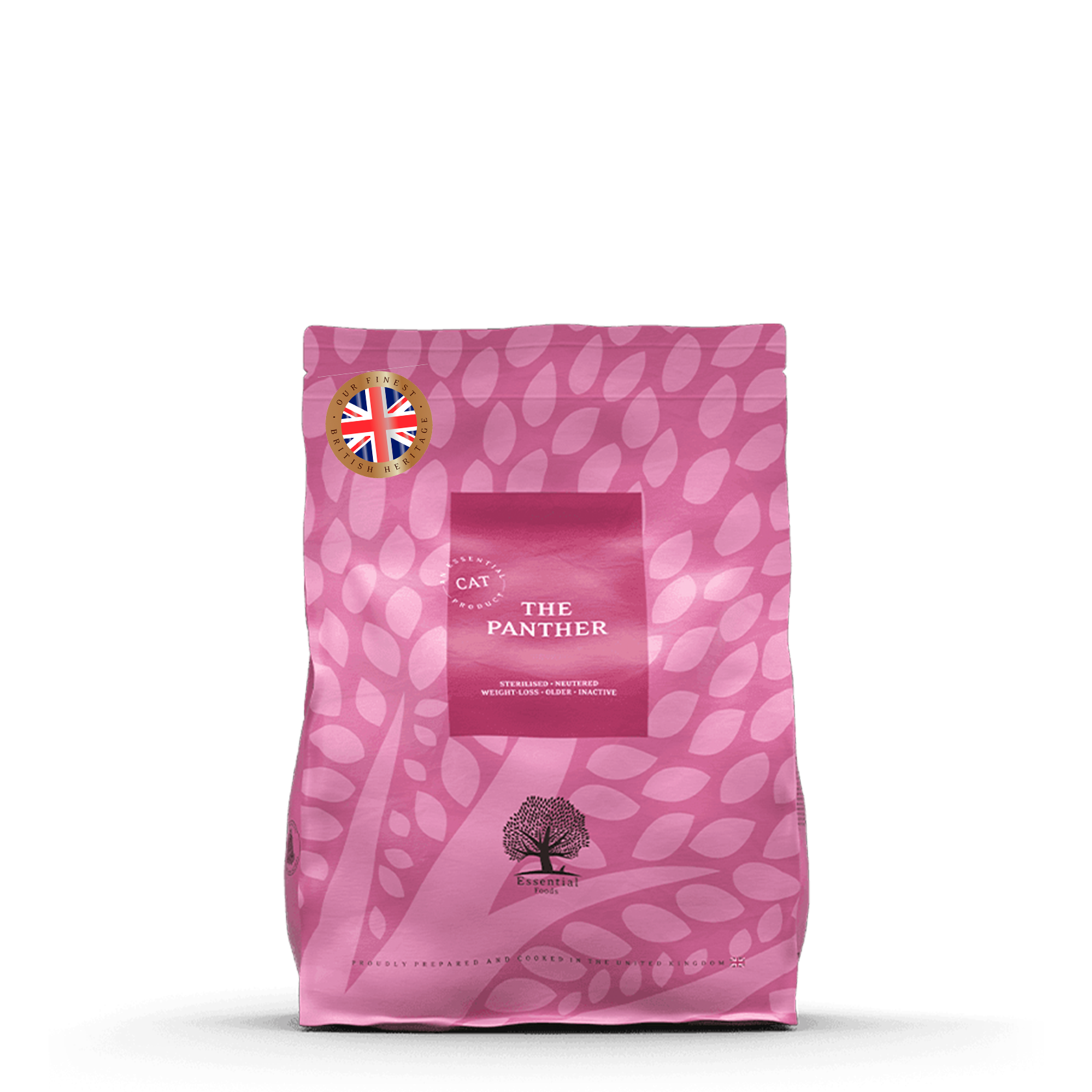
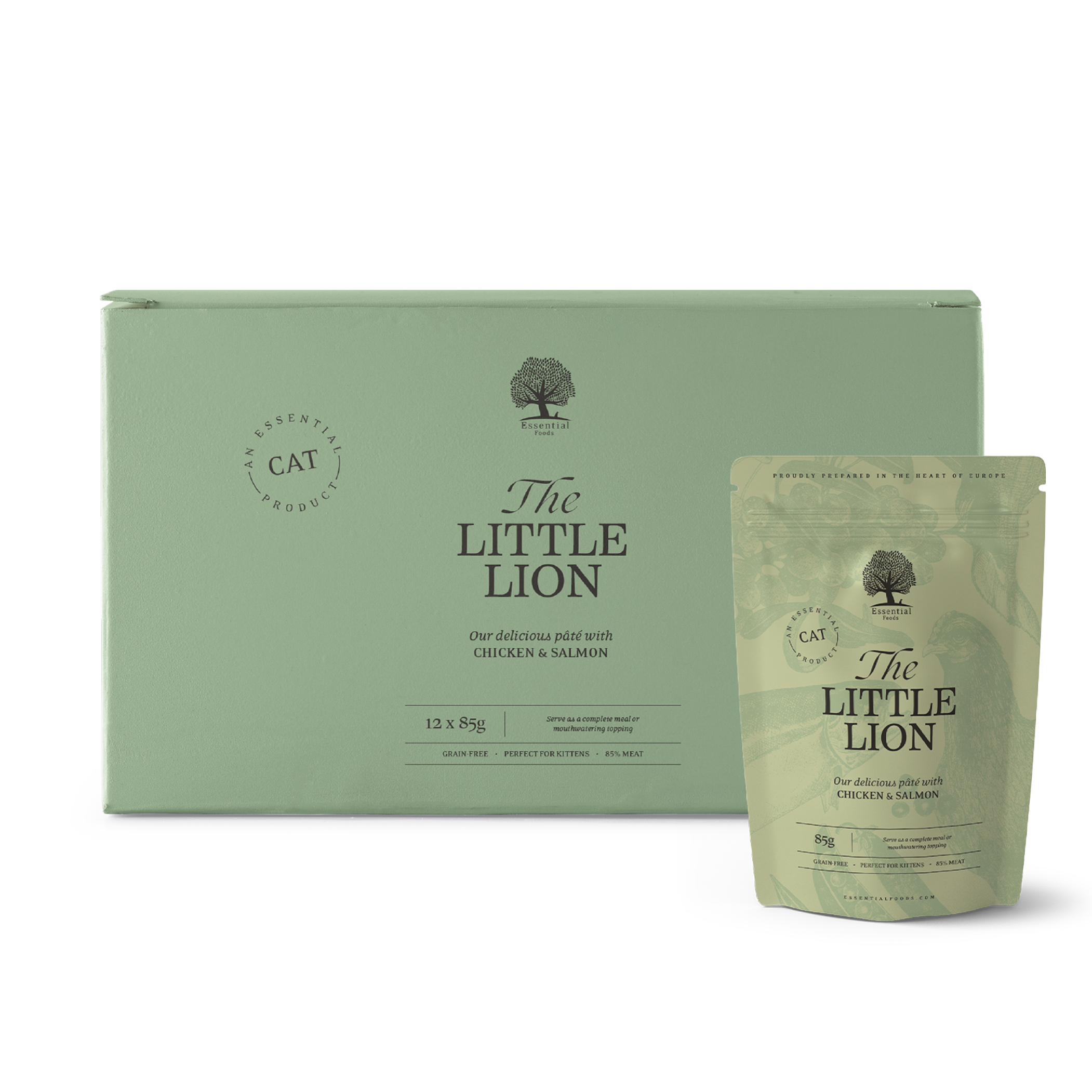
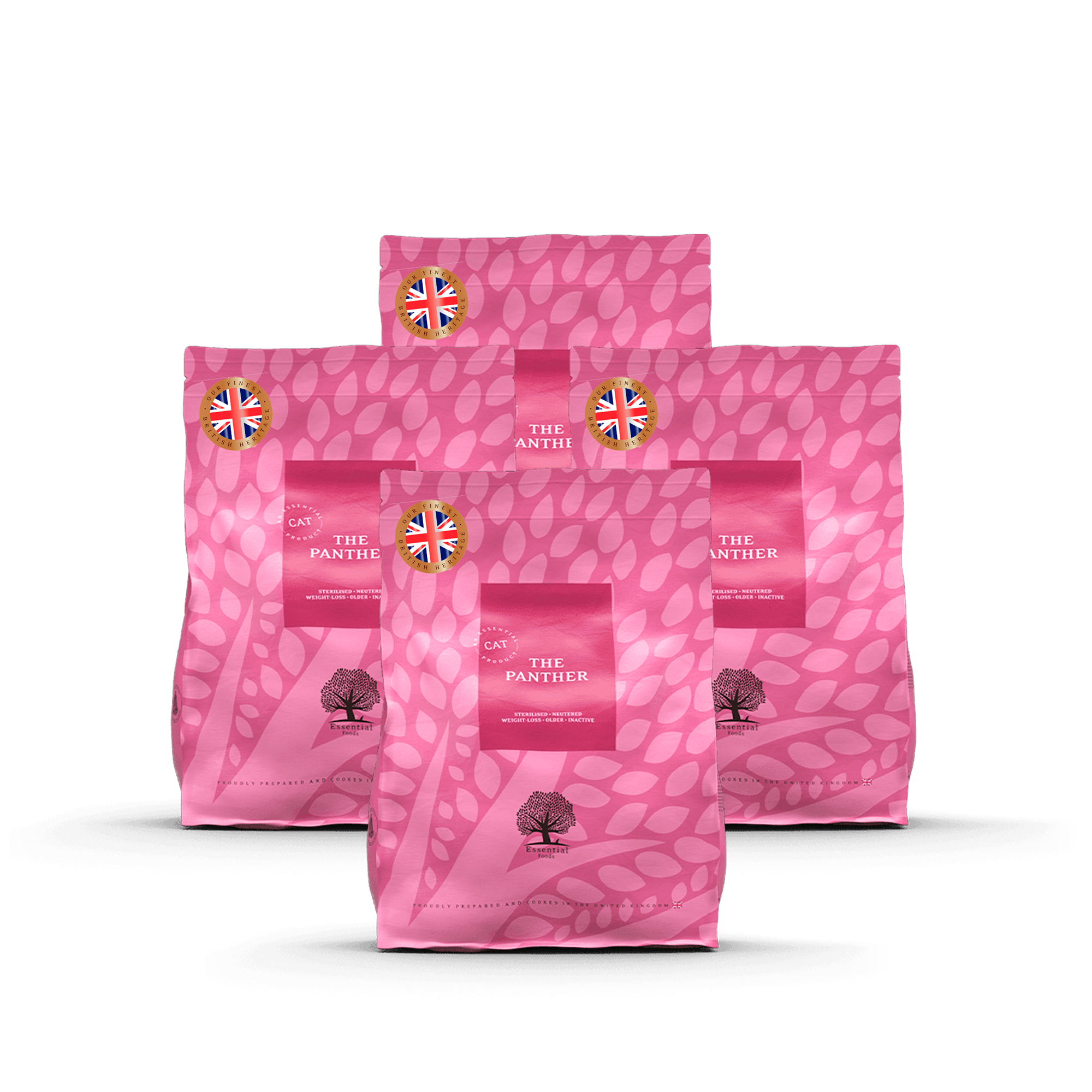
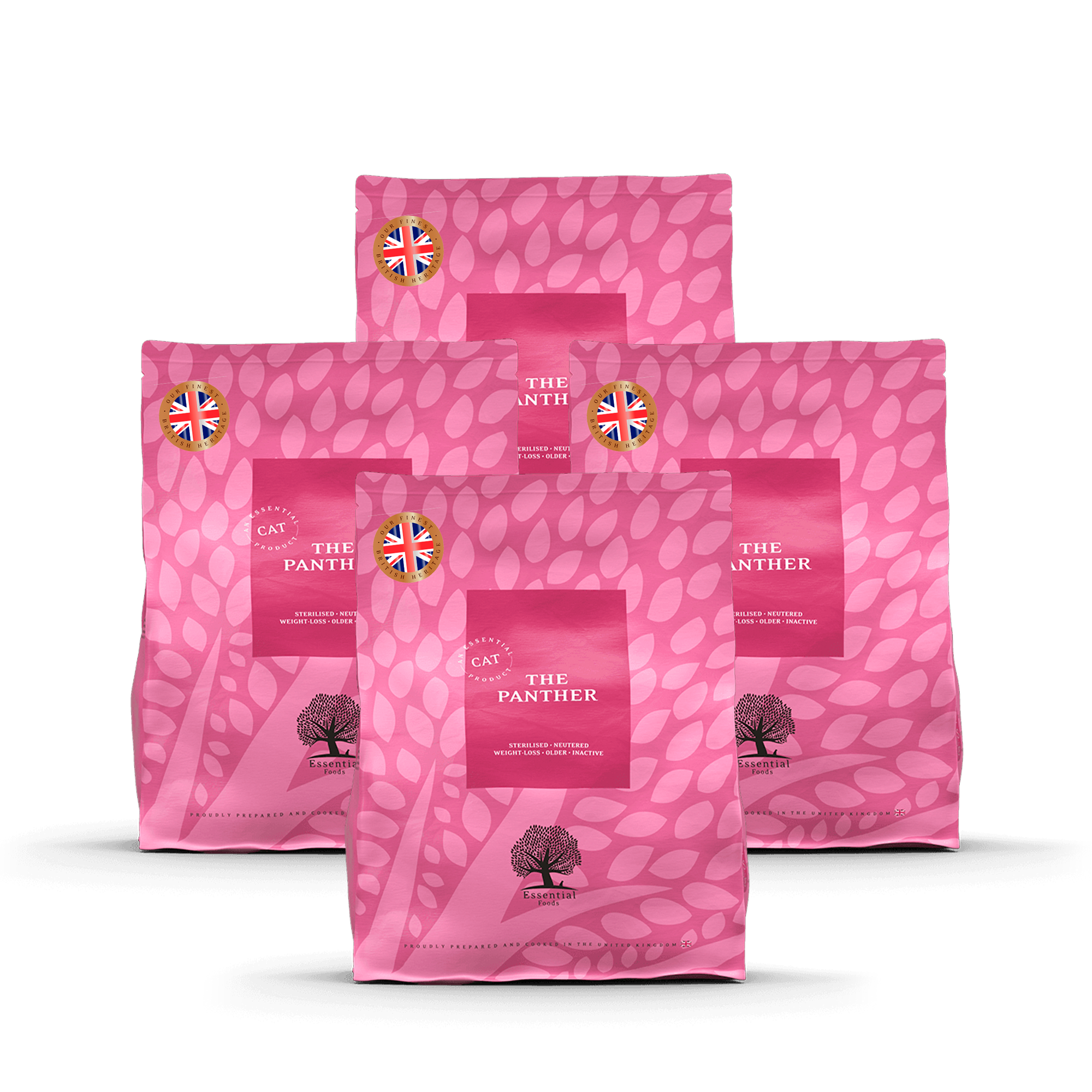
At Essential Foods, the cat range is divided according to exactly this. Meals for kittens are composed for growth, meals for adult cats cover the adult cat's everyday life, and meals for senior cats are adapted to the older cat. If your cat is sterilised or neutered, its energy needs and the risk of being overweight change, and there is separate food for that under meals for sterilised cats.
How long should a kitten have kitten food
As a general rule, a kitten should have kitten food until it is around 12 months old, at which point it is considered fully grown for most breeds. Some large cat breeds, such as the Maine Coon, grow for longer and can benefit from kitten food for up to one and a half to two years. Kitten food has a higher content of energy and protein, precisely because it needs to support a body that is growing rapidly.
The switch to adult food itself should happen gradually over about a week. Mix a little of the new food into the old, and increase the proportion day by day so that the stomach has time to get used to it. If you are unsure when your kitten is ready, you can read more in the guide how long should a kitten have kitten food.
How much should the cat eat, and when may kittens have dry food
How much a cat needs depends on weight, age and activity level, but most adult cats need somewhere between 40 and 60 grams of dry food a day, while a kitten eats more per kilo because it is growing. Always use the feeding guide on the bag as a starting point, and adjust according to the cat's body condition: if you can feel the ribs without seeing them clearly, the weight is usually fine.
Kittens can start having softened dry food as early as around four weeks of age, while they are still nursing, and move on to ordinary dry food once they are fully weaned at around eight weeks. If you want to calculate it more precisely, we go through amounts and feeding times in how much food should a kitten have per day and for the adult cat in how much should a cat eat.
Try the food before you buy a large bag
Cats are notoriously picky, and a food is only good if your cat will actually eat it. That is why it makes sense to test a new food on a small scale before you invest in a large bag. Under trial meals for cats you can try the food in a smaller quantity and see whether your cat takes to it, without ending up with several kilos it won't touch.
If you change food, do it gradually over about a week, no matter how good the new food is. A sudden change is the most common cause of a cat getting a loose stomach when you otherwise thought you were doing something good.